Season Tickets
Purchase Tosca as part of a two- or three-opera season ticket package today! Season ticket holders save up to 20% off single tickets and get unlimited ticket exchanges, discounts on additional tickets, and great offers from our friends in the arts and culture scene.
Season Sponsor

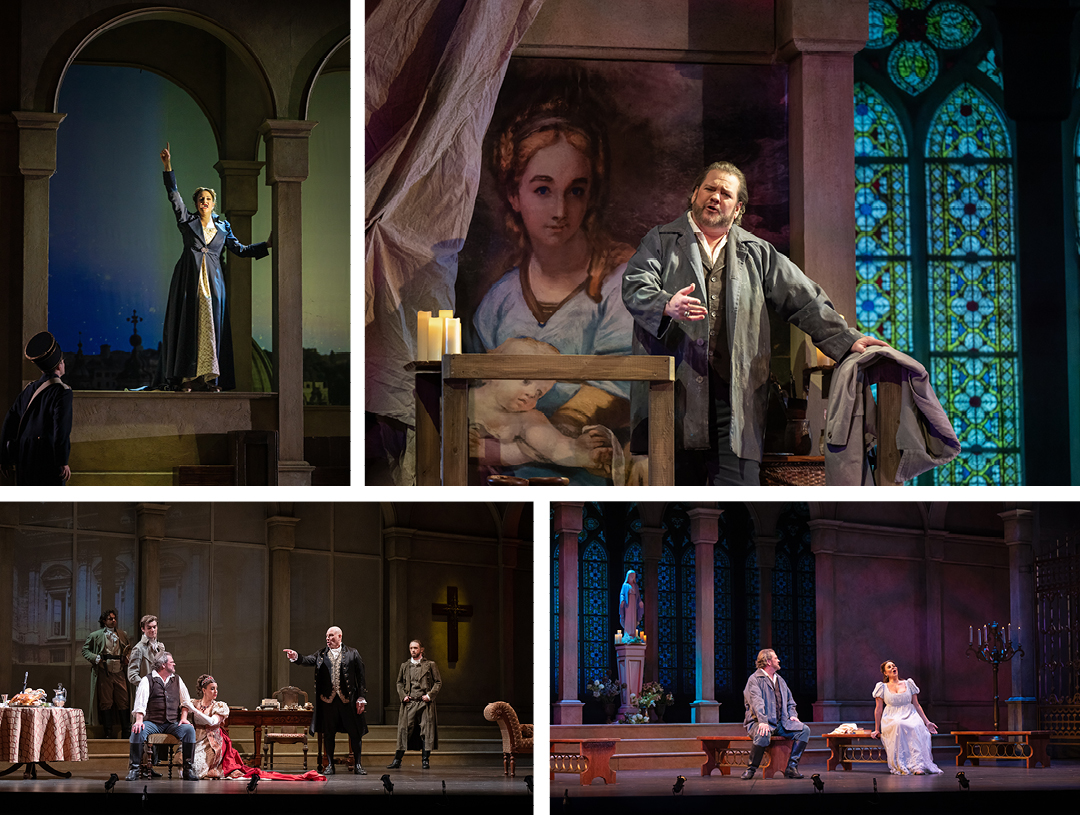
From left to right, top to bottom: 1. Joyce El-Khoury as Tosca. 2. David Pomeroy as Mario Cavaradossi. 3. David Pomeroy as Mario Cavaradossi, Joyce El-Khoury as Tosca, Gregory Dahl as Baron Scarpia, and Callum Alden as Spoletta. 4. David Pomeroy as Mario Cavaradossi and Joyce El-Khoury as Tosca. Photos by Emily Cooper.

Tosca
Composed by Giacomo Puccini Libretto by Luigi Illica and Giuseppe Giacosa Premiered 1900 in Rome Sung in Italian with English Projected Titles DATES October 24 – November 1, 2026 VENUE Queen Elizabeth Theatre Vancouver, BC RUNNING TIME Approximately 2 hours and 20 minutes, including one 25-minute intermission. Passion, politics, and betrayal collide in Tosca—a breathtaking opera where love burns bright against the dark tides of tyranny. Set amidst upheaval and war in 1800s Rome, the fiery singer Floria Tosca is caught in a deadly triangle between her beloved, the revolutionary artist Mario Cavaradossi, and Baron Scarpia, the corrupt, sadistic chief of police. Puccini’s masterful score will crackle with emotion under the baton of VO Music Director Jacques Lacombe, as Floria navigates a brutal game of power and sacrifice where even her voice—the thing she holds most sacred—becomes a weapon. This new co-production with Pacific Opera Victoria is directed by their celebrated Artistic Director, Brenna Corner, with a cast that includes baritone Gregory Dahl, who has recently stunned VO audiences as both Marcello in La Bohème and Don Pasquale, David Pomeroy, who The New York Times called “a powerful, agile tenor,” and the captivating Lebanese-Canadian soprano Joyce El-Khoury in the title role. More than a tale of doomed love, Tosca is a searing portrait of resistance in the face of oppression, where art and faith are tested against cruelty and injustice. It’s opera at its most visceral—intimate yet grand, deeply human and tragically heroic. In Tosca, the personal becomes political, and every choice cuts deep.
Conductor & Director

Jacques Lacombe
Conductor

Brenna Corner
Director

Amanda Testini
Associate Director
Cast

Joyce El-Khoury
Floria Tosca
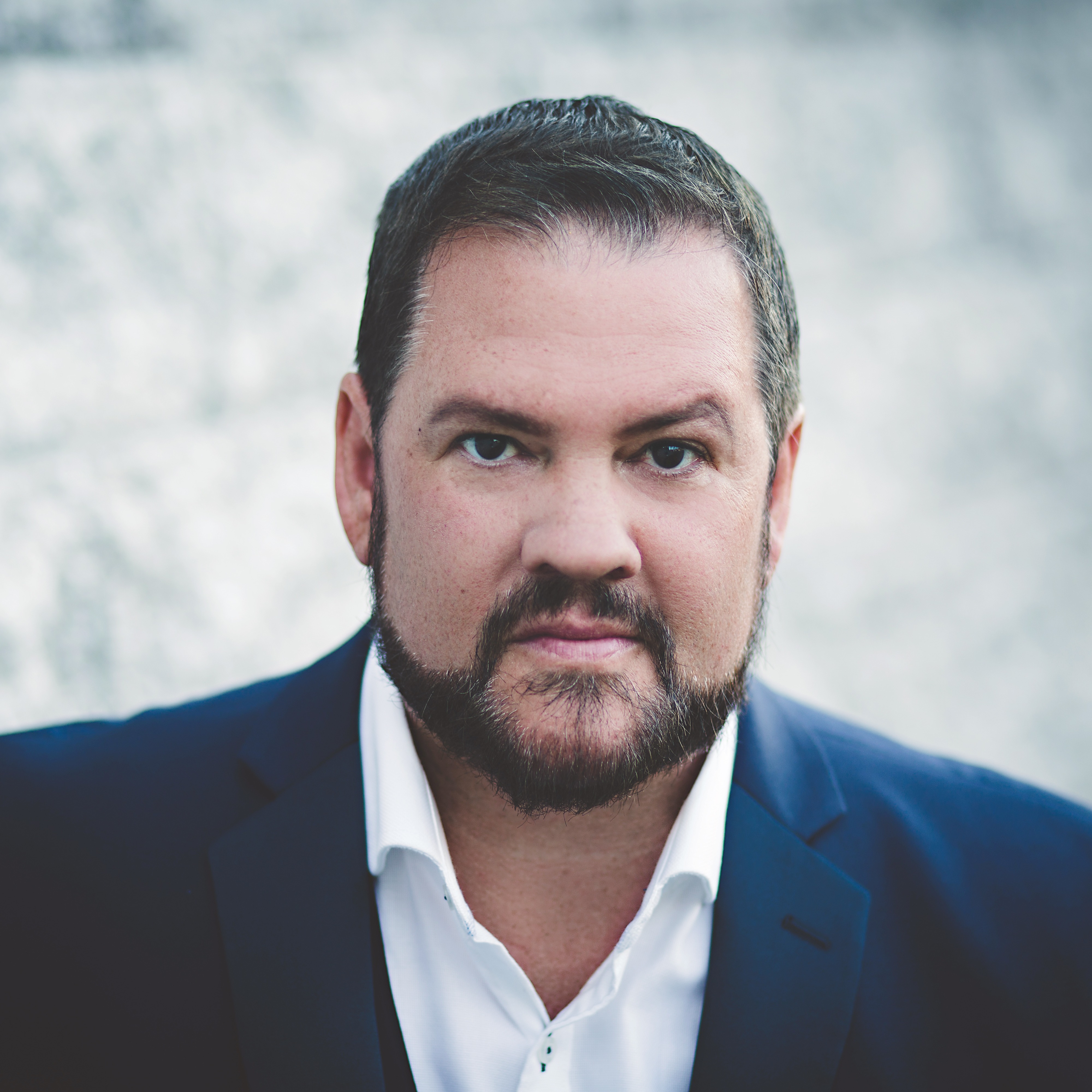
David Pomeroy
Mario Cavaradossi

Gregory Dahl
Baron Scarpia

Neil Craighead
Cesare Angelotti

Peter Monaghan
Sacristan

Callum Alden
Spoletta

Mihnea Nitu
Sciarrone

Willy Myles-Grenzberg
Jailer
Synopsis
THE STORY IN SHORT
Rome, 1800. Angelotti, an escaped political prisoner, takes refuge in a church where Cavaradossi is painting a portrait. Tosca arrives and is jealous because the portrait resembles another woman. Cavaradossi denies infidelity, before leaving with Angelotti. Head of police Baron Scarpia leverages Tosca’s jealousy and follows her to Cavaradossi’s villa. Scarpia tortures Cavaradossi. To save her lover, Tosca reveals Angelotti’s hiding place, and Angelotti commits suicide. Scarpia orders Cavaradossi’s death, but agrees to give a letter of safe passage and stage the execution if Tosca sleeps with him. After the letter is signed, Tosca kills Scarpia. She joyfully tells Cavaradossi of the fake execution plan, but Scarpia has tricked Tosca. The bullets are real, and with Cavaradossi dead, Tosca throws herself off the building.
Full Synopsis
Act I
The church of Sant’ Andrea della Valle Cesare Angelotti, an escaped political prisoner and ex-consul of Rome, enters the church furtively. He lets himself into the Attavanti Chapel after finding a key that his sister has hidden for him. The artist Mario Cavaradossi enters to resume work on his portrait of Mary Magdalene, whose face is that of a blue-eyed, golden-haired woman often seen praying in the church. Although he admires the beauty of his model, he thinks only of his true love, the darkhaired, dark-eyed singer Floria Tosca. Angelotti tries to sneak away but recognizes his friend Cavaradossi who, hearing Tosca’s voice outside, gives him a basket of food and forces him back into the chapel to hide. Tosca enters, and having heard voices, is suspicious of her love and accuses her lover of entertaining a woman when he should be working. Mario assuages her fears and agrees to meet her later that night at his villa near the edge of the city. When she has gone, Cavaradossi offers his villa to Angelotti as a hideout, and the two men flee together. Baron Scarpia, the head of judicial and religious enforcement (and police) arrives with his henchmen, in search of Angelotti. They quickly discover clues that connect Cavaradossi to the woman in the painting, who is really Angelotti’s sister. Tosca leaves, focused on finding Cavaradossi who she believes is being unfaithful to her at his villa, not realizing that she has been tricked and is leading Scarpia’s agents directly to her lover.
Act II
Scarpia’s offices in the Palazzo Farnese Having followed Tosca to Cavaradossi’s villa, Baron Scarpia has the painter secretly arrested for sheltering Angelotti (still hidden within the villa). Cavarodossi is brought before Scarpia for interrogation but is led to the torture chamber when he refuses to reveal Angelotti’s whereabouts. Tosca arrives, and Scarpia questions her as Cavaradossi’s cries of agony are heard in the adjoining room. Though Cavaradossi implores her to keep silent, Tosca agrees to reveal Angelotti’s hiding place if her lover is freed. Cavaradossi, angered by Tosca’s betrayal of his friend, openly defies Scarpia, who orders his execution. As news arrives of Angelotti’s discovery and subsequent suicide, Tosca begs for her lover’s life. Scarpia names his price: her submission to his lecherous advances. Desperate, she agrees so long as Scarpia writes a letter of safe conduct for herself and Cavaradossi. Scarpia insists that there must be at least a mock execution and arranges the details with his aide that this execution will take place as they did when they “shot” Count Palmieri. Alone with Tosca, Scarpia advances amorously towards her. She stabs him with a knife she has found, takes the safe conduct pass, and rushes out to free Cavaradossi.
Act III
The Battlements of the Castel Sant’ Angelo As dawn approaches, Cavaradossi arrives at the prison of Castel Sant’ Angelo to be executed by firing squad. He sings of his love for Tosca, a love which has finally given him reason to live. Tosca appears unexpectedly with the news that his execution is to be a fake one, and that when he is “shot” he must feign death. They share a moment of joy as they look forward to their life together. The execution takes place and Cavaradossi falls to the ground. After the firing squad marches off, Tosca is horrified to discover that her lover is actually dead—she was tricked by Scarpia, and the fake firing squad death “like Count Palmieri’s” was all a ruse. Shouting is heard from inside the castle: Scarpia’s body has been discovered. Trapped, Tosca cries out, consigning both herself and Scarpia to God’s judgement, and leaps from the building to her death.
Synopsis by Maureen Woodall, Pacific Opera Victoria


